


FROM PACKAGING WASTE TO SUSTAINABLE FLATCUBE©
Plastic recycling for the raw material of the Flatcube©
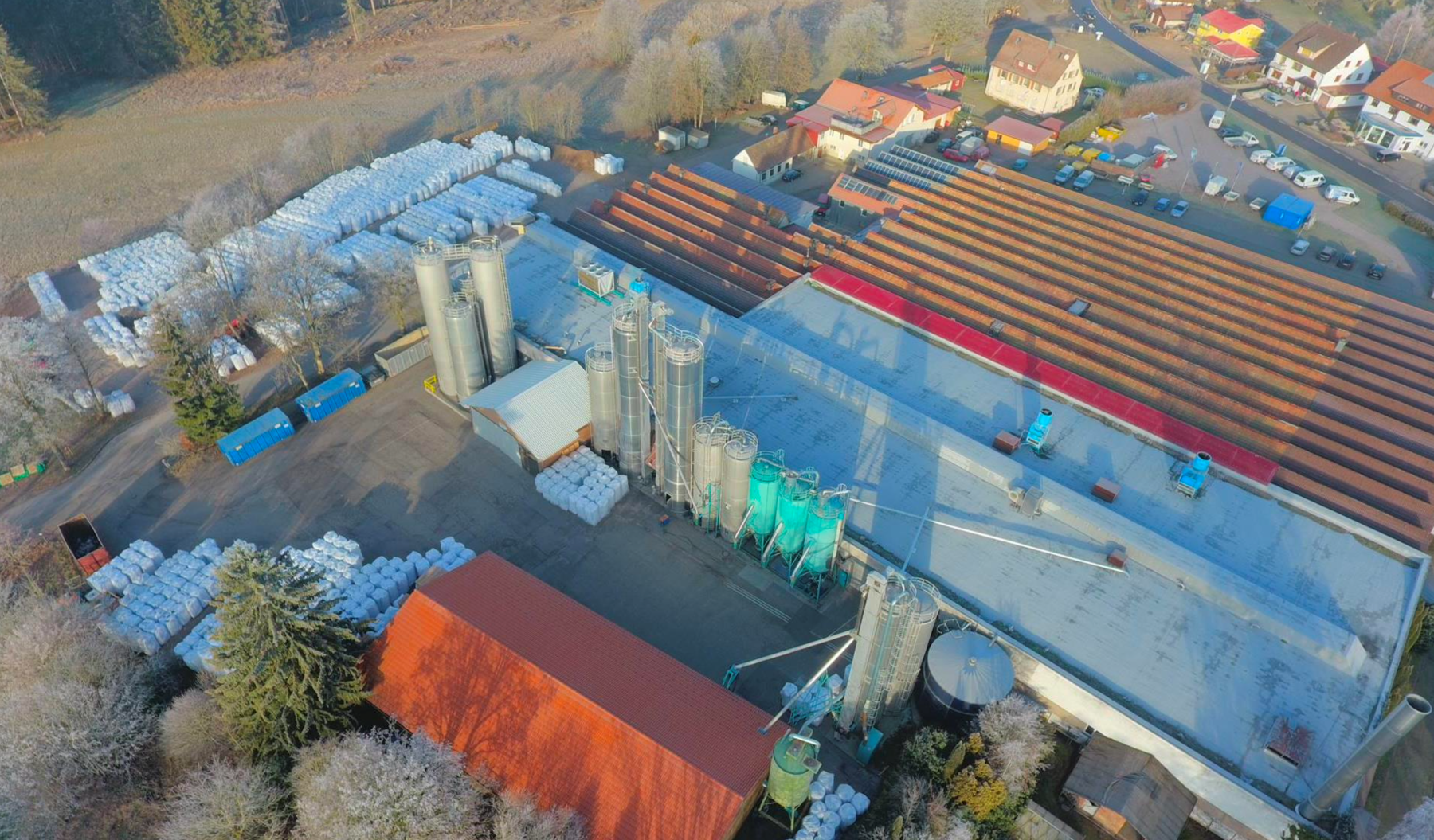
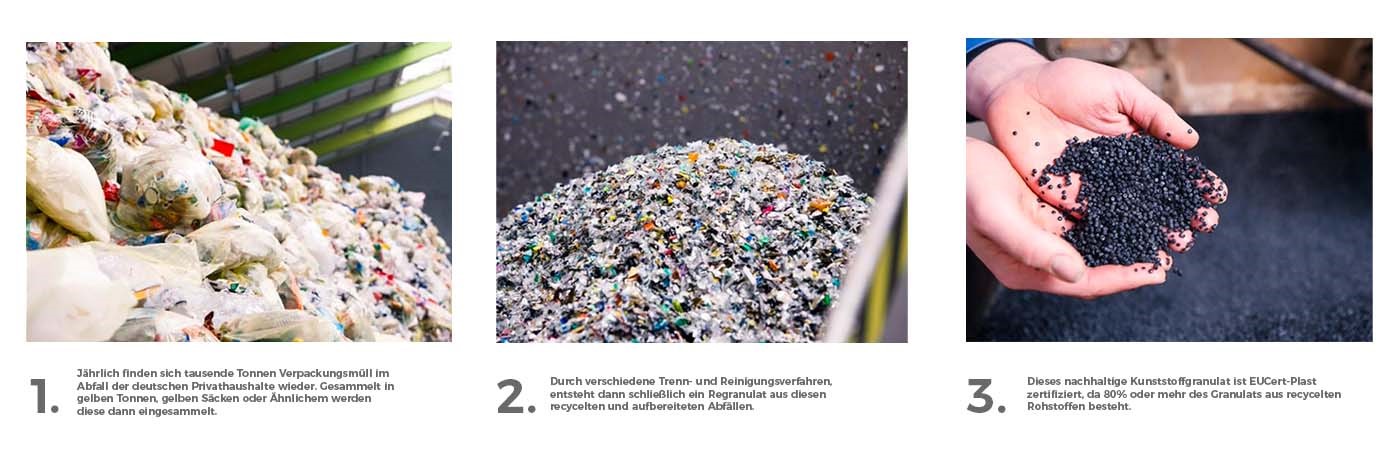
Every year, thousands of tons of packaging waste are found in the garbage of German private households. This is collected in yellow garbage cans, yellow bags or similar. Instead of incinerating this waste, for example, it can be recycled and used to produce new sustainable products. Vogt Plastic from Rheinfelden deals with precisely this task. Here, packaging waste from private households in the surrounding region is collected and recycled. Various separation and cleaning processes are then used to create a regranulate from this recycled and processed waste. This sustainable plastic granulate is EUCert-Plast certified, as 80% or more of the granulate consists of recycled raw materials. This certificate is the precursor to the well-known “Blue Angel” certification, which signals to the end consumer that the manufactured products are made from recycled raw materials. In addition, the RAL quality mark, which is also available, enables the exact content of recycled raw material originating from private households to be specified. Vogt Plastic is a company that operates throughout Europe and has unique recycling processes, many years of experience in the field of recycling and stands for laboratory-tested quality. The granulate can be adapted to individual requirements, for example through various coloring options. This unique raw material therefore provides the perfect basis for the sustainable Flatcube© from BAS.
A seat cube is made from discarded packaging
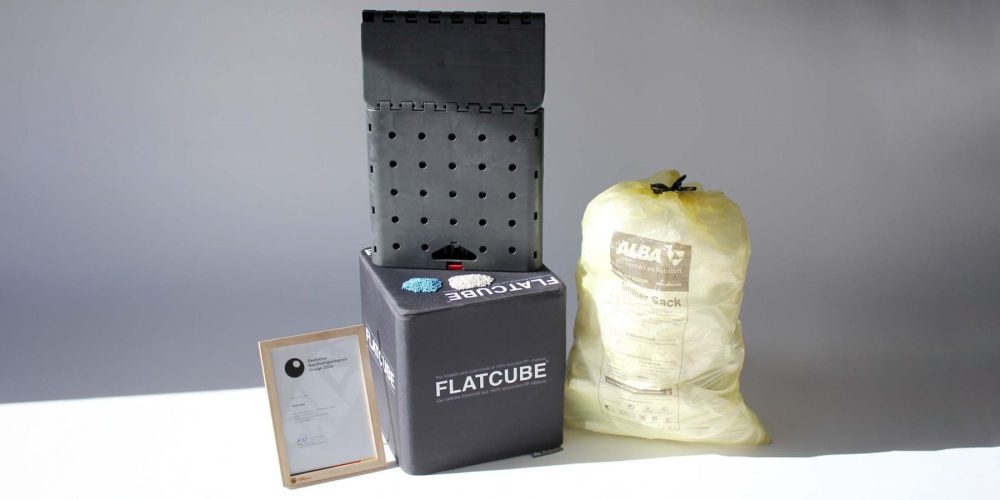
In the next step, the body of the foldable seat cube is made from the sustainable recycled granulate. The granulate is sent to a regional producer on Lake Constance. This keeps transportation distances short and creates a regional connection. The finished Flatcube© is not only made from sustainable raw materials, but also revolutionizes one of the most popular advertising materials for trade fairs, events and the point of sale. The cover can be printed all over and is therefore ideal for presenting a brand or company. Thanks to its simple folding mechanism, the foldable seat cube from BAS can be set up in just two steps and requires no knowledge or tools. Thanks to its foldability, it also has a very low weight and small transport dimensions, which is very conducive to flexibility. In addition, several Flatcubes© can be linked together to create a bench. These features create a good basis for successful exhibition stands and brand representation.
What makes the Flatcube© particularly sustainable
But what exactly makes the Flatcube© sustainable? The recycled pellets play a large part in this. Instead of producing new plastic granulate, the CO2 footprint can be reduced to a third thanks to the recycled raw material. In addition, both the granulate and the seat cube itself are produced regionally, resulting in short supply chains. This also reduces emissions. The folding mechanism of the Flatcube© also ensures more sustainable transportation. This saves 73% of the transport volume compared to conventional seat cubes. In concrete terms, 92 cubes can be transported on a Euro pallet instead of 16, which either creates more space for other products or saves on transportation costs and therefore benefits the environment. The covers are also sustainable, as either Oeko-Tex-certified textiles or wool felt from Germany are used. They are also washable and replaceable, so you don’t have to buy a new seat cube straight away if they get dirty or worn. All these features have led to the Flatcube© being a finalist for the German Sustainability Award 2022. The BAS seat cube is a real alternative for a more sustainable society.